Visualizzazione post con etichetta culture. Mostra tutti i post

giovedì 7 novembre 2013

What The British Do Not Say... A Lesson Plan

Has any of your intermediate student ever asked you the following question?
"How can I sound more English?"
If yes, what is your answer?
Personally, a language is not just grammar and pronunciation. A language is communication, people, culture, traditions, customs. You cannot speak a language if you do not know its people. Thus, I introduced a new students' activity in my course: CULTURAL SHOCK. Why a shock and not simply "a cultural communication meeting"? Because everytime my students are told something about the British culture they look at me with a puzzled expression and say: "Reallyyyyy?"

A couple of months ago I read this article http://www.telegraph.co.uk/news/newstopics/howaboutthat/10280244/Translation-table-explaining-the-truth-behind-British-politeness-becomes-internet-hit.html and I thought that this chart was brilliant to teach my students what to understand (and reply) when they deal with British people in daily situations:


LESSON PLAN
LEVEL: INTERMEDIATE ADULT STUDENTS
TIME: ABOUT 1 HOUR
1.  Ask your students to come up with stereotypes about British people.
(weather, tea, the Queen, politeness, etc.) (5 minutes)

2. Introduce the topic of BEING POLITE by showing your students this picture and ask them: "What's happening"'? (5 minutes)

3. Give each student a copy of the above picture and ask them to write what the drawning man said in the two situations. (5 minutes)

4. Once the students have filled in their speech bubbles make them compare with each other. Then show them the original picture. Feedback. (5 minutes)


5. Students read this passage from the book New English File Intermediate and answer the following questions:
a. Why did Miranda get angry the first time she met Alexander?
b. Why was Alexander surprised?
c. What is their agreement now?
(10 minutes)


6. Once you have cut out all the expressions from the chart stick them on different colour cards. 


- Divide the students in two groups. 
- Students of group one will have WHAT THE BRITISH SAY cards and students of group two will have WHAT FOREIGNERS UNDERSTAND cards. (Give each student a card, you can do more rounds or select only some expressions). 
- Students stand up and go around the classroom to find their partner.
- Monitor well, when the students find their partner they can sit down next to each other. (10-15 minutes)

7. Once all the students are sitting next to their partner. Show your students a plastic bag with the WHAT THE BRITISH MEAN cards in.
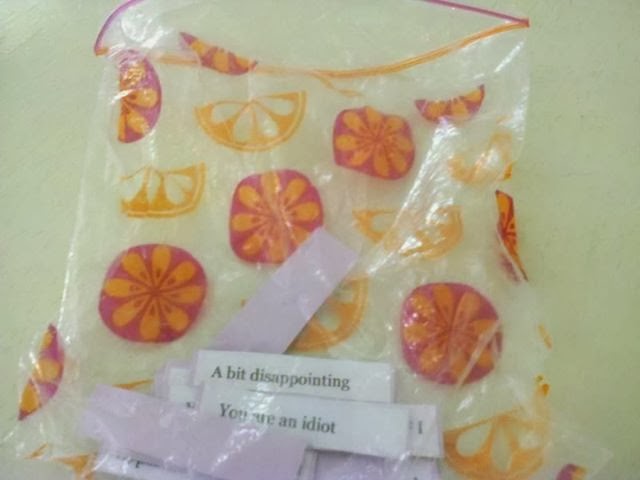

- Students in turn pick up a card and read it aloud. The pair who have the corresponding WHAT THE BRITISH SAY and WHAT FOREIGNERS UNDERSTAND must raise their hands. (10-15 minutes)

My students and I had a lot of fun! I hope you will enjoy it, too!


mercoledì 24 luglio 2013

Royal baby: words and numbers


Some vocabulary about BIRTH
Pregnancy
pregnant
pregnancy
A woman becomes pregnant. We say she's pregnant. She's having a baby. We call also call it a pregnancy.
Antenatal
antenatal
She goes to an antenatal clinic for check ups. Antenatal means "before birth", it's also called prenatal.
Labour
labour
Eventually she starts to have the baby. We call this going into labour.
Labour
birth
newborn
When the baby arrives we say the mother has given birth. The baby is called a newborn baby.
Had a baby
baby
We also say the parents have had a baby.
Nursing
milk
breastmilk
Babies drink milk. They can be breast fed.
Bottle fed
bottle
They can be bottle fed.
Change nappy
nappy
Babies have to have their nappy changed.
Registrar
certificate
All babies are registered at birth, and issued with a birth certificate.
Christening
christening
Some babies are christened by their parents. The ceremony is called a christening.
Pram
pram
Babies can't walk so they get pushed in prams.
Pushchair
pushchair
When babies are older they go for walks in pushchairs.


Yesterday, 23rd July 2013 Metro UK published this picture.

 TEACHING TIPS: 1) show your students the picture at the top of the page (William, Kate and the Royal baby)
2) ask them what they think about this event.
3) write all the numbers shown in the picture above on the whiteboard
4) ask your students to read the numbers (sometimes they forget how to pronounce long numbers) what they represent
5) they will come up with different ideas and practice their speaking skills
6) finally, show them the picture and see if they guessed!

lunedì 27 maggio 2013

martedì 23 aprile 2013

St George's Day

Today 23rd April English celebrate St George's Day, the saint patron of England.
On the occasion, the newspaper Mirror has published a list of things to try in England!
Have a look ;-)

http://www.mirror.co.uk/news/uk-news/st-georges-day-2013-101-1848785?tabPane=Comments


martedì 5 marzo 2013

BRIT CULT

Sabato scorso abbiamo inaugurato una nuova STUDENTS' ACTIVITY: BRIT CULT, ovvero British Culture (Cultura britannica).
Questo primo incontro l'abbiamo dedicato al patrono del Galles: St. David.
Ecco qui il risultato del nostro workshop!
Il prossimo incontro di Brit Cult sarà sabato 16 marzo 2013 e celebreremo St. Patrick, il patrono dell'Irlanda. Il workshop sarà dedicato agli studenti dei corsi ADULTS.
Vi aspetto!


martedì 12 febbraio 2013

Pancake day (Shrove Tuesday)

Hi there! Today is Pancake day, also called Shrove Tuesday.
Let's have a look to this cultural event together!

The long build up to Easter (Pasqua) is called Lent (Quaresima). The day before Lent begins is called Shrove Tuesday. 'Shrove' means being forgiven for your sins. It happens on a different date each year depending on when Easter is. This year Shrove Tuesday is today 12 February, 2013.

Pancake
Pancake
But why do we call this day Pancake day?
Long ago this was a day for feasting and having a good time. People would go to church to confess the bad things they had done and would be 'shriven' or forgiven before the start of Lent. Since rich foods such as eggs were forbidden during Lent, one way of using them up would be to make pancakes.

The Pancake race
 Legend has it that way back in 1445 a housewife from Buckinghamshire was making pancakes when she heard the church bells ringing. In her rush to get to church, she ran out the house still holding her frying pan! Thus the pancake race was born...
 One of the most famous pancake races is held in Olney, Buckinghamshire. The race has been held for hundreds of years. Competitors need to be women over 18 years of age who must wear a skirt, an apron and head covering. They have to toss their pancake on the start line and again at the finish to prove they haven't lost it.
The Pancake race

 Are you good at cooking? Follow this link for making delicious pancakes!
http://www.bbc.co.uk/food/recipes/basicpancakeswithsuga_66226